1,000 Miles, 4 Days, 3 National Parks


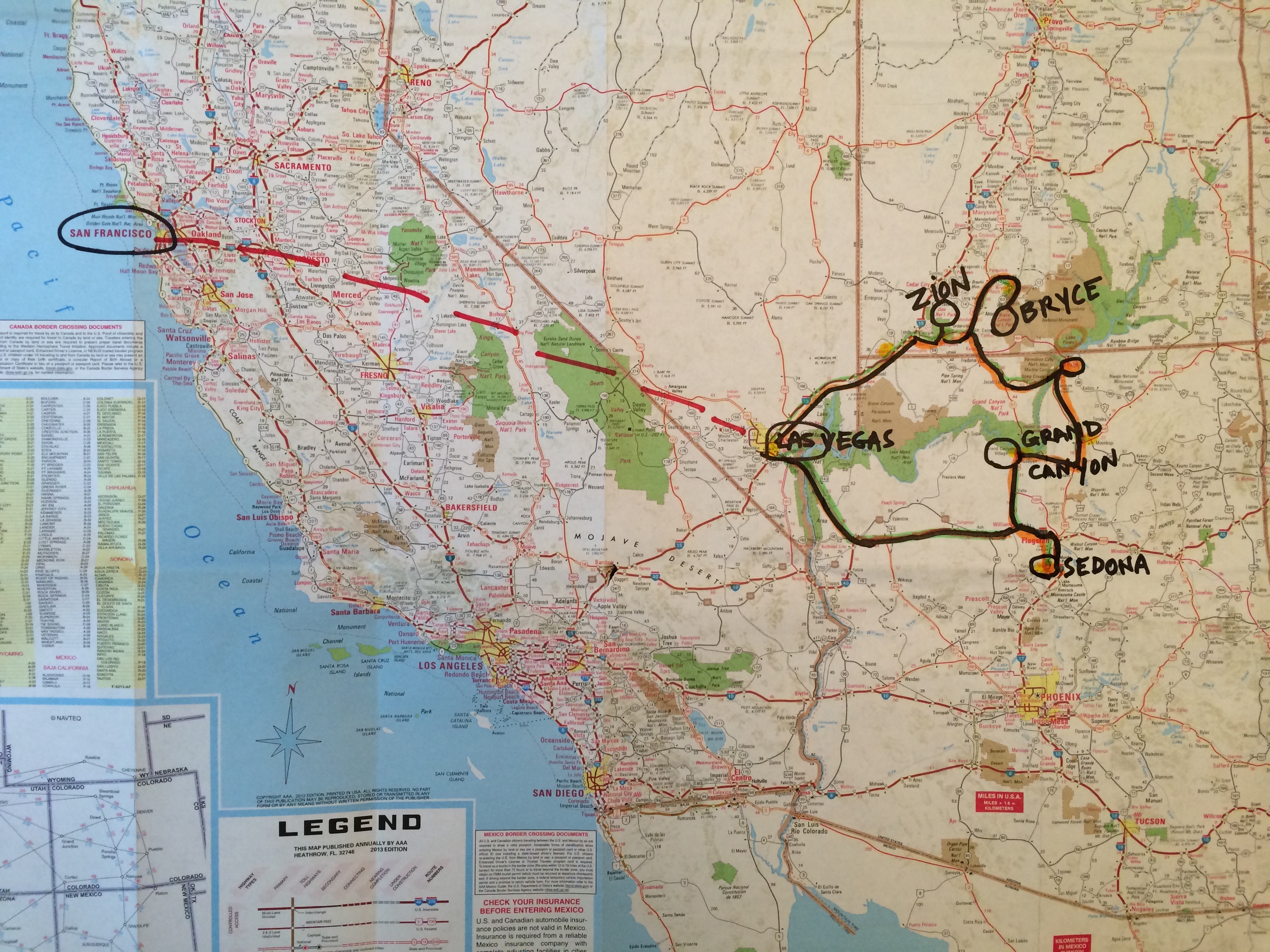
IMG_2570TOTAL DISTANCE OF TRIP:  1,041 miles

DURATION OF TRIP: 4 days (June 2-5, 2014)

TOTAL HOURS DRIVEN:  23 hours

STATES VISITED:  NV, UT, AZ

DRIVING DISTANCE BY DAY: 170 miles, Las Vegas, NV to Springdale, UT.  245 miles, Springdale, UT to Page, AZ.  305 miles, Page, AZ to Sedona, AZ.  315 miles, Sedona, AZ to Las Vegas, NV

TOTAL FUEL COSTS: 27 gallons / $106

AVERAGE MILES PER GALLON:  29 mpg

AVERAGE PRICE OF GAS:  $3.81/gallon

HIGHEST GAS PRICE, UT:  Sedona, $3.99/gallon

LOWEST GAS PRICE, UT:  Mt. Carmel, $3.75/gallon

NATIONAL PARKS VISITED: Zion, Bryce Canyon, Grand Canyon

Return to Vegas, Snow on the Sierra

The final day of our trip was a six-hour drive from Sedona to Las Vegas, with stops for milk shakes in Kingman and photos at Hoover Dam.

In 104-degree heat, we didn’t do any walking around at the dam located on the Arizona-Nevada border, 30 miles southeast of Las Vegas.  Hoover Dam rises above Lake Mead and stands 726 feet tall, from foundation rock to the roadway on top.  A pedestrian lane on the Mike O’Callaghan – Pat Tillman Memorial Bridge offers a view of the dam and the Colorado River from a height of 880 feet.  The bridge, second-highest in the U.S., is named for O’Callaghan, a decorated Korean War veteran and two-term governor of Nevada, and Tillman, a pro football star from Arizona who joined the Army and was killed in Afghanistan.

After turning in the rental car and keys at McCarran International Airport, we flew back from Las Vegas to San Francisco.  From 35,000 feet, it was a very different perspective of the desert we had just crossed.  And quite a contrast to the snow-capped Sierra Nevada mountain range of Eastern California.

Next up: trip facts, figures, fuel, firsts, etc.

Roadside Signs and Oddities

What would a road trip be without quirky signs and attractions.  We found plenty of peculiarities dotting the back roads of Utah and Arizona .

The Mother Road, Route 66

The Mother Road is a name given to U.S. Route 66 by John Steinbeck in his Pulitzer Prize winning novel The Grapes of Wrath.  Before it was replaced by the Interstate Highway System, Route 66 had become an icon in the character, commerce, and culture of America.  Stretching more than 2,400 miles from Illinois to California, Route 66 enabled westward migration by all manner of motor vehicle.

Heading to Las Vegas from Sedona, we exited Interstate 40 to experience a few miles of the Mother Road.  The Arizona towns of Williams and Kingman have preserved their pieces of the historic highway.  Williams was the very last to be bypassed by the interstate.  Both towns retain the spirit of 66 in their historic business district motels, diners, soda fountains, restaurants, souvenir shops and classic cars.

Sedona

A red, white, and blue banner proclaims “God Bless Our Firefighters” outside the Center for the New Age in the heart of Sedona, Arizona.  A large sign erected on a residential rooftop reads “Thank You, Firefighters.”

In late May and early June, more than 21,000 acres burned in the Slide Rock State Park and Coconino National Forest areas.  Hundreds of cabins, houses and businesses were evacuated, but no homes were lost.  The Slide Fire occurred less than a year after 19 members of the Granite Mountain Hotshots died fighting a wildfire near Yarnell, Arizona.

Sedona’s sandstone red and orange rock formations rise from the desert floor and stand tall against vast blue sky on a clear day.  The smoke had mostly dissipated and the forest fire was fully contained when we got there on Wednesday.  We arrived in time to see Cathedral Rock and Bell Rock, but didn’t get to visit Two Nuns Rock or the Chapel of the Holy Cross, a cliffside shrine of ancient geology, modern architecture and the blessing “Peace to All Who Enter.”

As an indulgence after our ambitious 700-mile three-day trip across desert and mountain terrain to three national parks in temperatures topping 100-degrees with intermittent air conditioning in the rental car, I booked us into the Amara Resort and Spa in Sedona for the final night of our expedition.

The hotel’s hot tub and infinity pool offered a spectacular sunset view of Snoopy Rock (so named for a profile resembling Charlie Brown’s dog sleeping atop his doghouse.) We then enjoyed a relaxing dinner of ribs, ribeye, Sedona Amber and Four Peaks IPA at the nearby Cowboy Grill.

Besides scratching the Grand Canyon off the bucket list, my uncle and I achieved another lifetime first when we signed up to take a yoga class on Thursday morning.  After further reflection Wednesday night, the decision was made to forgo the yoga experience.  Instead we ordered a poolside breakfast of steel-cut oatmeal over caramelized apples and made an earlier start on the 300-mile drive back to Las Vegas.

Next up: Route 66

What to Drive

After careful consideration, we finally decided on the proper vehicle for an ambitious 4-days traversing the mountains and deserts in heat of 100+ degrees.

  1. Harley-Davidson – would have required a whole new wardrobe (and tattoos)
  2. Bicycle – would have required new legs (and Spandex shorts) for climbing 8,000 foot summits
  3. VW Lovebug – already been there and done that
  4. Harley – see #1 above
  5. Fiat – would have required shorter legs
  6. Ford Escape – fit for purpose, the right car for this 2014 road trip through the great American Southwest.

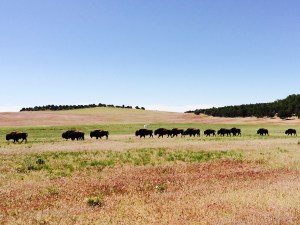
Oh Give Me a Home Where the Buffalo Roam…


IMG_2250


…and the deer and the antelope play.

Where never is heard a discouraging word.

And the skies are not cloudy all day.

This herd was on the move when we stopped at a bison preserve between Zion and Bryce.  Free to roam, with a wood rail fence between them and the people driving on US-89.


IMG_2284


On a paved road inside Bryce Canyon National Park, a Utah Prairie Dog didn’t seem to mind the traffic.  Drivers slowed down and went around the endangered species.

In Arizona, highway signs instructed motorists to watch for elk.

Grand Canyon – Bucket List Viewpoint

“No language can fully describe, no artist paint the beauty, grandeur, immensity and sublimity of this most wonderful production of Nature’s great architect.  [Grand Canyon] must be seen to be appreciated.” – C.O. Hall, Grand Canyon visitor 1895


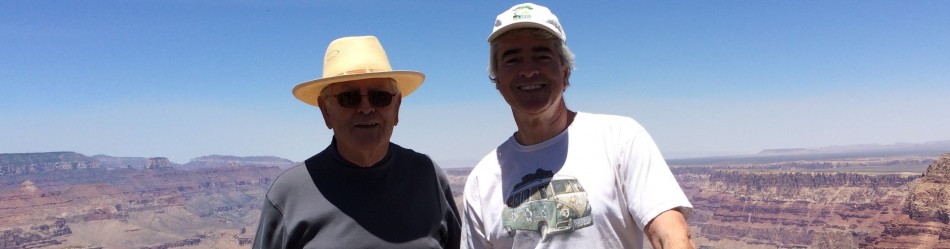
I completely agree with Mr./Ms. Hall’s assessment of the Grand Canyon.  Neither photography nor paint nor narrative can do justice to its magnificence.  Road construction slowed the last stretch of highway from Page, AZ down to Cameron where we made a pit stop and a sharp right turn toward the park high above the Colorado River.  Light haze and smoke at the rim of the canyon Wednesday did not obscure the panorama. At the South Rim we took a short walk and went in the Watchtower at Desert View, built in 1932.  The road along the South Rim has fabulous viewpoints and signs explaining the geology and history.  The wonder of it all is awe-inspiring.  At Lipan Point lookout, we saw river rapids 3.8 miles afar and one mile below.  “It took me 82 years to get here,” Father Kevin remarked and smiled at the edge of the Grand Canyon.   This stop on his bucket list complete, we made a start toward Sedona.


Like Nowhere Else on Earth

Beyond the boundaries of Bryce Canyon National Park lies the Dixie National Forest, largest in Utah.  Elevation 2,800 to 11,310 feet.  The name Dixie was given by Mormon settlers who said the warm climate reminded them of the Deep South.  You can see hoodoos from the highway and up close on a trail behind the Red Canyon Visitors Center.  Bristlecone pine, longest-lived tree species in the world, grows in this part of the forest.  Other rare species include the Red Canyon beardplant.

Speaking of beards…a recently unearthed photo of questionable veracity reveals a popular padre sporting a SF Giants baseball cap.

After two days in Utah, Fr. Kev and I set out for Arizona, arriving by nightfall at Lake Powell and the town of Page.  Prominent on the desert floor near Lake Powell is the Navajo Generating Station (NGS), a coal-fired power plant with three chimney stacks rising 775 feet into the sky.  Located on the Navajo Indian Reservation, the 2,250 megawatt NGS is the largest coal-fired power plant in the West.